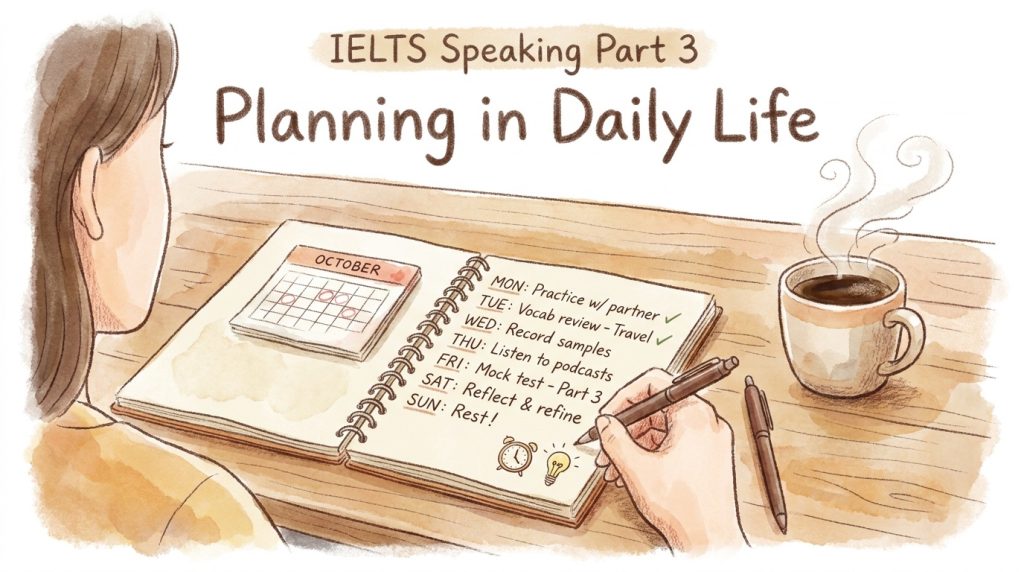
The model answers below are taken from a members-only video lesson.
Watch the full lesson:
Download the audio track and full transcript of the lesson here:
https://buymeacoffee.com/tracywang/extras
Speaker : Finn
Do you think planning is important? Why or why not?
Yeah, I definitely think planning is important, especially as a university student. Without a clear plan, it’s really easy to fall behind on assignments or waste time on less important things. I’ve noticed that when I plan my week in advance, I feel less stressed and more in control. At the same time, I don’t think everything needs to be planned down to the smallest detail. Life can be unpredictable, so some flexibility is necessary. Overall, though, having a basic plan makes a huge difference in productivity.
What are the advantages of being good at planning?
Being good at planning has a lot of benefits, both academically and personally. For one thing, it helps you manage your time more efficiently, so you can balance studying, social life, and maybe even a part-time job. It also reduces stress because you already know what needs to be done and when. Personally, I feel more confident when I have a clear plan instead of just improvising. Another advantage is that you’re more likely to achieve long-term goals, since you can break them into smaller, manageable steps. In the long run, it just makes life more organized and less chaotic.
How do people usually plan their work or studies?
These days, most people rely heavily on digital tools to plan their work or studies. For example, many of my classmates use apps like Google Calendar or task management apps to keep track of deadlines. Some people still prefer writing things down in a notebook, which can actually be quite effective. Personally, I use a mix of both because it helps me stay organized. People also tend to prioritize tasks based on urgency and importance. Overall, the method varies, but the goal is usually the same—staying on top of responsibilities.
What skills are necessary to be a good planner?
I think there are several key skills needed to be a good planner. First of all, time management is essential because you need to estimate how long tasks will take. Another important skill is prioritization, since not everything can be done at once. You also need to be disciplined enough to follow your plan consistently. In addition, being flexible is important because plans don’t always go as expected. Finally, I’d say having good organizational skills helps you keep everything clear and structured. All these skills together make planning much more effective.
Should children be taught how to plan their time? Why or why not?
Yes, I believe children should definitely be taught how to plan their time. Learning this skill early can help them become more independent and responsible. For example, if they know how to organize their homework and free time, they won’t feel overwhelmed as they grow older. However, I think it should be taught in a simple and gradual way, not in a strict or stressful manner. Children still need time to play and be spontaneous. So it’s really about finding the right balance. In the long term, it’s a very valuable life skill.
How can parents or schools help children develop planning skills?
Parents and schools both play an important role in developing children’s planning skills. Parents can start by encouraging their kids to create simple daily routines, like setting aside time for homework. Schools can also teach basic time management through structured schedules and assignments. Teachers might give students small projects that require planning over several days. In addition, adults should guide children rather than control everything for them. This allows kids to learn from their own mistakes. Over time, they’ll naturally become better at planning.
Do you think technology has made planning easier? In what ways?
Yes, I think technology has made planning much easier than before. There are so many apps that help you organize your schedule, set reminders, and track your progress. For instance, I personally rely on my phone to remind me of deadlines and important events. It also allows you to quickly adjust your plans if something changes. On the other hand, too much reliance on technology can sometimes be distracting. Still, overall, it has made planning more convenient and accessible. I can’t really imagine managing my schedule without it now.
Can too much planning ever be a bad thing?
Yes, I think too much planning can actually be counterproductive. If you try to plan every single detail, it can become stressful and exhausting. Sometimes things don’t go as expected, and overly rigid plans can make it hard to adapt. I’ve experienced this myself during exam periods when I tried to follow a perfect schedule. When something went wrong, I felt frustrated. It’s important to leave some room for flexibility and spontaneity. So while planning is useful, overdoing it can have negative effects.
How does planning help in achieving long-term goals?
Planning plays a crucial role in achieving long-term goals. It allows you to break down big objectives into smaller, more manageable steps. For example, if you want to graduate with good grades, you need a clear study plan over several years. Without planning, it’s easy to lose direction or motivation. It also helps you track your progress and make adjustments when necessary. Personally, I find that having a long-term plan keeps me focused. In the end, it makes big goals feel much more achievable.
Do you prefer to plan things or be spontaneous? Why?
I’d say I prefer a balance between planning and spontaneity. For important things like exams or deadlines, I always make a plan to stay organized. However, in my free time, I like to be more spontaneous and go with the flow. For example, I might decide to hang out with friends at the last minute. I think this balance keeps life both productive and enjoyable. If everything is planned, it can feel a bit boring. So for me, a mix of both works best.
Leave a Reply