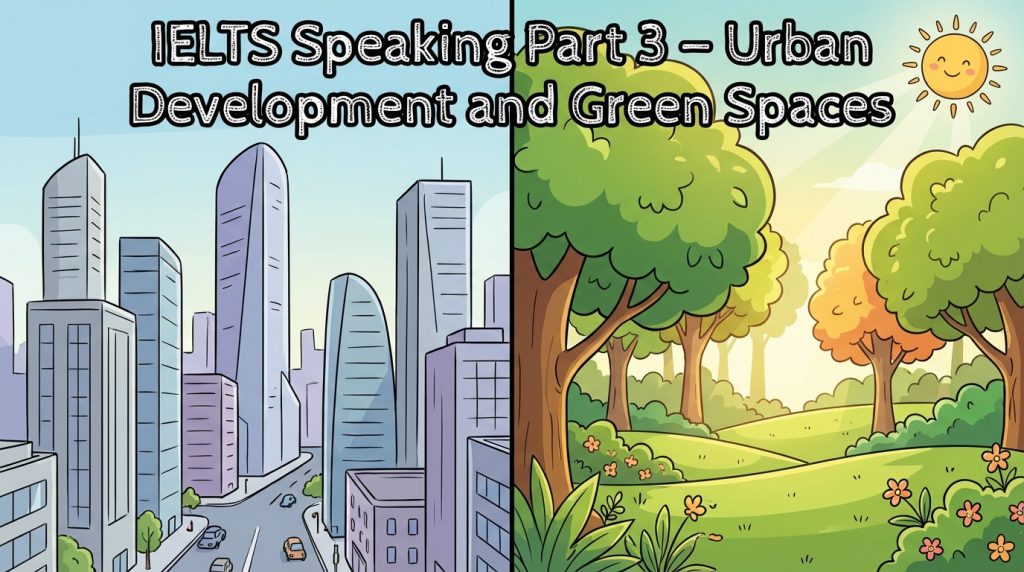
The model answers below are taken from a members-only video lesson.
Watch the full lesson:
Download the audio track and full transcript of the lesson here:
https://buymeacoffee.com/tracywang/extras
Speaker: Joseph
Why are trees important for people’s health?
Honestly, I think they’re vital. It’s not just about the oxygen—though that’s obviously huge—it’s more about the mental reset they provide. There’s something about being around greenery that just de-stresses you instantly. Plus, in a hot city, they’re like natural air conditioning. Without them, we’d all be a lot more burnt out.
Should cities invest more in green spaces?
Definitely. I mean, look at most modern cities—they’re just concrete jungles. If a council doesn’t set aside land for parks, the quality of life just plummets. It’s a bit of a no-brainer, really; more parks mean happier people and less of that stifling “heat island” effect you get in downtown areas.
How does living near nature influence lifestyle?
It’s a game-changer. If you have a trail or the woods right outside your door, you’re way more likely to go for a run or a stroll after work. It encourages a much more active, outdoorsy way of living. Compare that to living in a high-rise where you might not even see a leaf all day—it’s a totally different vibe.
What problems occur when too many trees are cut down?
It’s a bit of a domino effect. First, you lose the wildlife—their homes are just gone. Then you get issues with the soil; without roots to hold it together, you get landslides or massive flooding when it rains. And obviously, on a bigger scale, it just wreaks havoc on the climate because we’re losing our best way to soak up carbon.
Do people in your country care enough about protecting nature?
I’d say it’s a work in progress. People love going to the beach or the mountains on the weekend, but do they actively fight for them? Not always. There’s a bit of a disconnect between enjoying nature and actually doing the hard work to protect it from developers.
Do you think living close to nature is better than living in a big city?
That’s a tough one! I’m a bit torn. I love the buzz and the “everything-at-your-fingertips” feel of a city, but it can be exhausting. Ideally, I’d want to live in a leafy suburb—you know, somewhere quiet enough to hear the birds, but close enough to the city that I can still get a decent coffee or go to the cinema.
What role should the government play in protecting green spaces and natural environments?
They should be the ones drawing the line in the sand. Individuals can only do so much; we need the government to pass strict laws to stop companies from bulldozing forests for profit. They also need to put their money where their mouth is and fund the upkeep of our national parks.
How can individuals help protect nature in their daily lives?
It starts with being mindful. Even small things, like choosing recycled products or making sure we aren’t wasting paper, add up. But I think the biggest thing is community action—joining a local group to plant trees or even just voting for leaders who actually care about the environment.
Will future generations have fewer natural places to visit?
I really hope not, but it’s a scary thought. If we keep expanding the way we are, those “wild” spots are going to become like museum pieces—rare and crowded. That said, there’s a big push for “urban rewilding” lately, so maybe the nature of the future will just look a bit different—more integrated into our cities.
Leave a Reply