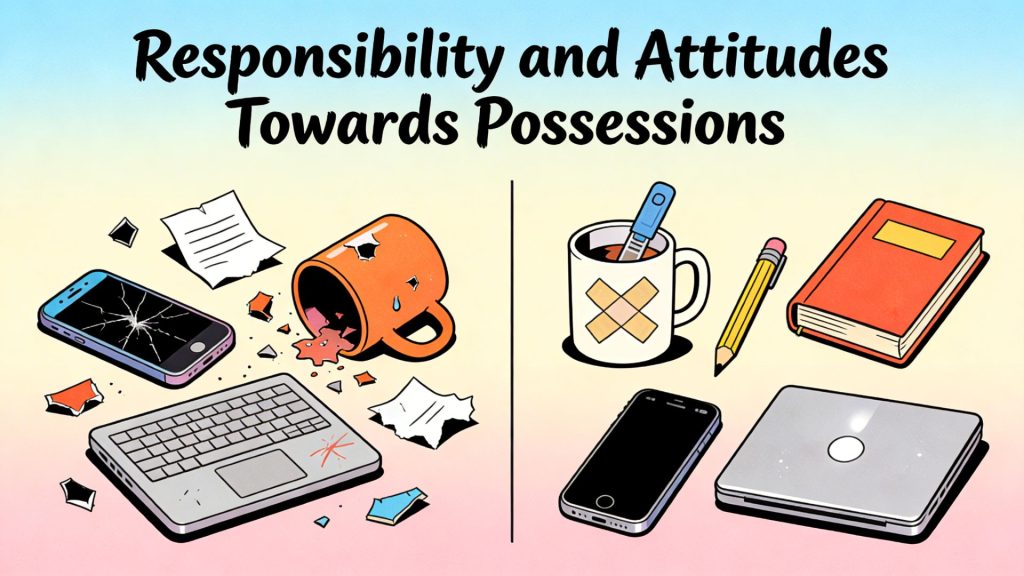
The model answers below are taken from a members-only video lesson.
Watch the full lesson:
Download the audio track and full transcript of the lesson here:
https://buymeacoffee.com/tracywang/extras
Speaker: Joseph
Why do people sometimes act carelessly and end up breaking things?
I think carelessness often happens when people are distracted or under pressure. For example, when someone is rushing to work or multitasking, they may not pay full attention to what they’re handling. Stress can also reduce concentration, which increases the likelihood of accidents. In some cases, people simply take things for granted, especially if the item isn’t very valuable. There’s also a psychological factor — when something belongs to someone else, individuals might be less cautious. Overall, it’s usually a combination of distraction, stress, and attitude.
Do you think children should be punished if they break something? Why or why not?
I don’t think punishment is always the best solution, especially if the damage was accidental. Children are naturally curious, and sometimes breaking things is part of exploring their environment. Instead of punishment, I believe parents should use the situation as a learning opportunity. For instance, they can explain why the object was valuable and encourage the child to be more careful next time. However, if a child repeatedly behaves irresponsibly, some form of mild discipline might be necessary. The key is teaching responsibility rather than creating fear.
Is it better to repair broken items or replace them?
In most cases, I think repairing items is a better option. It’s more environmentally friendly because it reduces waste and limits unnecessary consumption. Repairing something can also be more cost-effective, especially for high-quality products. However, if the repair costs almost as much as a replacement, then buying a new item might make more sense. Another factor is convenience, as modern lifestyles often prioritize speed over sustainability. Ideally, people should weigh the financial, environmental, and practical aspects before deciding.
How do people usually feel when they damage something expensive?
Most people feel a strong sense of regret or frustration when they damage something valuable. The financial loss can be upsetting, particularly if the item took a long time to afford. There’s often a feeling of self-blame, especially if the accident could have been avoided. In some cases, people may even feel embarrassed if the damage happened in front of others. However, over time, many realize that material possessions can be replaced. Ultimately, the emotional reaction depends on both the item’s value and its personal significance.
Do you think modern products are made to last? Why or why not?
I believe many modern products are not designed for long-term use. Some companies follow a strategy known as planned obsolescence, where products are intentionally made to have a limited lifespan. This encourages consumers to purchase newer models more frequently. Compared to older generations of appliances or furniture, today’s items often seem less durable. On the other hand, high-end brands still prioritize quality and longevity. Overall, durability today often depends on the price range and brand philosophy.
Should companies offer free repairs for damaged products?
In certain situations, yes, especially if the damage is due to a manufacturing defect. Companies have a responsibility to ensure their products meet basic quality standards. Offering free repairs during a warranty period builds consumer trust and brand loyalty. However, if the damage is clearly caused by misuse, it may not be reasonable to expect free service. A balanced approach would be to provide affordable repair options instead of encouraging full replacement. This could also promote more sustainable consumption patterns.
How can parents teach children to be more responsible with their belongings?
Parents can start by setting clear expectations about how to handle personal items. For example, they can assign small responsibilities, such as organizing toys or taking care of school supplies. Consistency is crucial, as children learn through repeated practice. It’s also helpful for parents to model responsible behavior themselves. When children see adults treating possessions carefully, they are more likely to imitate that behavior. Positive reinforcement, such as praise, can also encourage responsibility.
Do you think people value possessions less than they did in the past?
In some ways, yes, especially because modern consumer culture encourages frequent replacement. With fast fashion and rapidly changing technology, many items are considered disposable. In the past, people tended to repair and reuse belongings more often. However, I think sentimental items are still deeply valued today. The difference lies more in everyday consumer goods rather than meaningful possessions. So while practicality may have changed, emotional attachment remains strong.
Are accidents more common at home or in the workplace? Why?
I would say accidents are probably more common at home because people tend to feel more relaxed there. When individuals are comfortable, they may pay less attention to safety. In contrast, workplaces often have formal safety regulations and supervision. However, certain jobs involving machinery or construction naturally carry higher risks. The type of environment plays a significant role in determining accident frequency. Overall, minor accidents may be more common at home, while serious ones might occur at work.
What can individuals do to avoid damaging things accidentally?
First of all, people should try to slow down and stay mindful, especially when handling fragile or expensive items. Creating organized spaces can also reduce the risk of accidents. For instance, keeping electronics away from liquids is a simple but effective precaution. Regular maintenance, such as checking for loose parts or wear and tear, can prevent damage as well. Additionally, avoiding multitasking when dealing with delicate objects can improve concentration. Small habits like these can significantly reduce accidental damage.
Leave a Reply