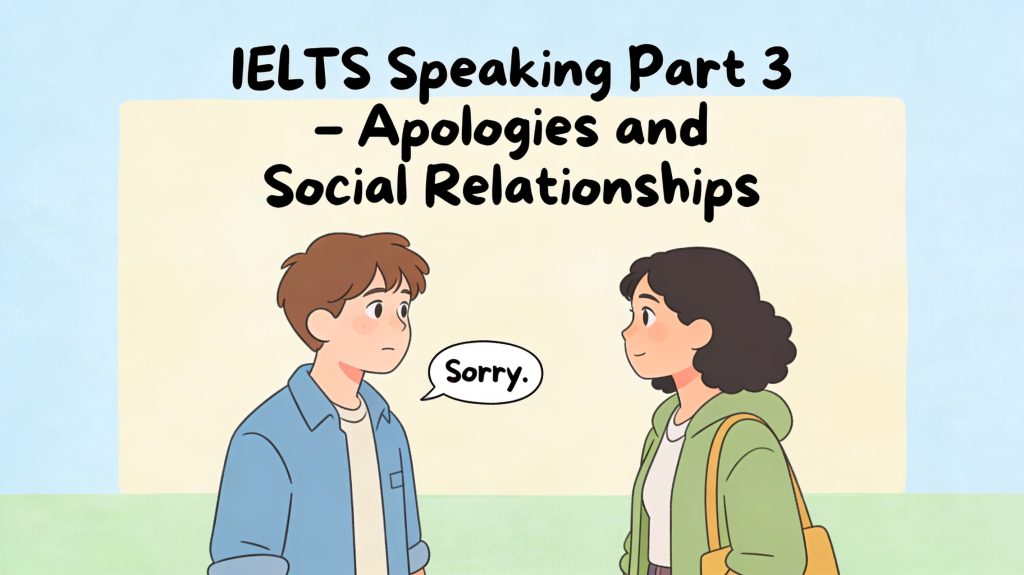
The model answers below are taken from a members-only video lesson.
Watch the full lesson:
Download the audio track and full transcript of the lesson here:
https://buymeacoffee.com/tracywang/extras
Speaker: Joseph
Why do people apologize?
People apologize mainly to acknowledge that they’ve made a mistake and to show respect for the other person’s feelings. It’s a way of taking responsibility instead of ignoring the problem or blaming others. In many cases, apologizing helps reduce tension and prevents conflicts from getting worse. It also shows emotional maturity, because admitting fault isn’t always easy. Sometimes people apologize simply to maintain harmony, even if the mistake wasn’t very serious. Overall, apologies help keep relationships balanced and healthy.
How important is it to apologize when you make a mistake?
I think it’s extremely important to apologize when you’ve done something wrong. Without an apology, the other person may feel ignored or disrespected, which can damage trust. A sincere apology shows that you care about the impact of your actions, not just your intentions. Even small mistakes can grow into bigger problems if they’re not acknowledged. In my opinion, apologizing early often prevents misunderstandings. It’s a simple act, but it can make a big difference.
What makes an apology sincere or insincere?
A sincere apology usually includes taking full responsibility and not making excuses. When someone clearly explains what they did wrong and expresses genuine regret, it feels more real. Tone and body language also matter, especially in face-to-face situations. On the other hand, an insincere apology often sounds rushed or forced, like saying “sorry if you feel that way.” If the person repeats the same mistake, the apology loses its value. Actions after the apology are just as important as the words.
Do people in your country apologize often?
In my country, people do apologize, but it depends on the situation and the relationship. Among friends and family, apologies are quite common and usually informal. However, in more formal settings, like workplaces, people sometimes avoid apologizing because they don’t want to appear weak. Instead, they may explain the situation without clearly saying sorry. Younger people tend to apologize more openly compared to older generations. Overall, apologizing is accepted, but it’s not always done directly.
Are apologies more important in personal relationships or at work?
I think apologies are important in both, but they serve slightly different purposes. In personal relationships, apologies help maintain emotional closeness and trust. If you don’t apologize to friends or family, resentment can build up over time. At work, apologies are more about professionalism and responsibility. They help teams function smoothly and show accountability. So while the style may differ, apologies are equally important in both areas.
Is it harder for some people to apologize than others? Why?
Yes, I believe it’s definitely harder for some people to apologize. Personality plays a big role, especially for people who are very proud or stubborn. Some see apologizing as admitting weakness rather than maturity. Past experiences can also affect this, for example if someone was punished for mistakes instead of being encouraged to learn from them. Cultural background matters too, as some cultures discourage openly admitting fault. As a result, apologizing can feel emotionally uncomfortable for certain people.
Should children be taught to apologize? How?
Yes, children should definitely be taught to apologize from a young age. It helps them understand empathy and the effect their actions have on others. However, they shouldn’t be forced to say sorry without understanding why. Parents and teachers should explain what went wrong and why it matters. Setting a good example is also important, because children learn a lot by observing adults. Over time, apologizing becomes a natural and meaningful habit.
Do you think people apologize more or less nowadays than in the past?
I think people apologize more often nowadays, especially in everyday situations. Social media and modern communication have made people more aware of others’ feelings. At the same time, some apologies today feel less sincere because they’re done quickly or publicly. In the past, apologies might have been less frequent but more serious. Younger generations seem more comfortable expressing emotions, including regret. So overall, apologies are more common, but not always deeper.
Can an apology always fix a problem or damaged relationship?
No, an apology can’t always fix everything, especially if the damage is serious. While apologizing is a good first step, it doesn’t automatically erase hurt feelings. In some cases, trust takes a long time to rebuild, even after a sincere apology. Repeated mistakes can also make apologies meaningless. However, without an apology, healing is almost impossible. So it’s necessary, but not always sufficient.
Are there situations where saying “sorry” is not enough?
Yes, there are definitely situations where words alone are not enough. For example, if someone causes serious emotional or financial harm, action is required as well. People expect change, not just an apology. In professional situations, fixing the mistake is often more important than saying sorry. Sometimes compensation or long-term effort is needed to rebuild trust. In those cases, an apology only matters if it’s followed by real responsibility.
Leave a Reply